We live in a world that seems increasingly averse to confrontation. Difficult conversations, especially those that challenge our deeply held beliefs, are often avoided like the plague. The word “argument” itself has become synonymous with aggression, conflict, and negativity. But what if I told you that argument, in its truest form, is not about winning or losing, but about a deeper exploration of ideas?
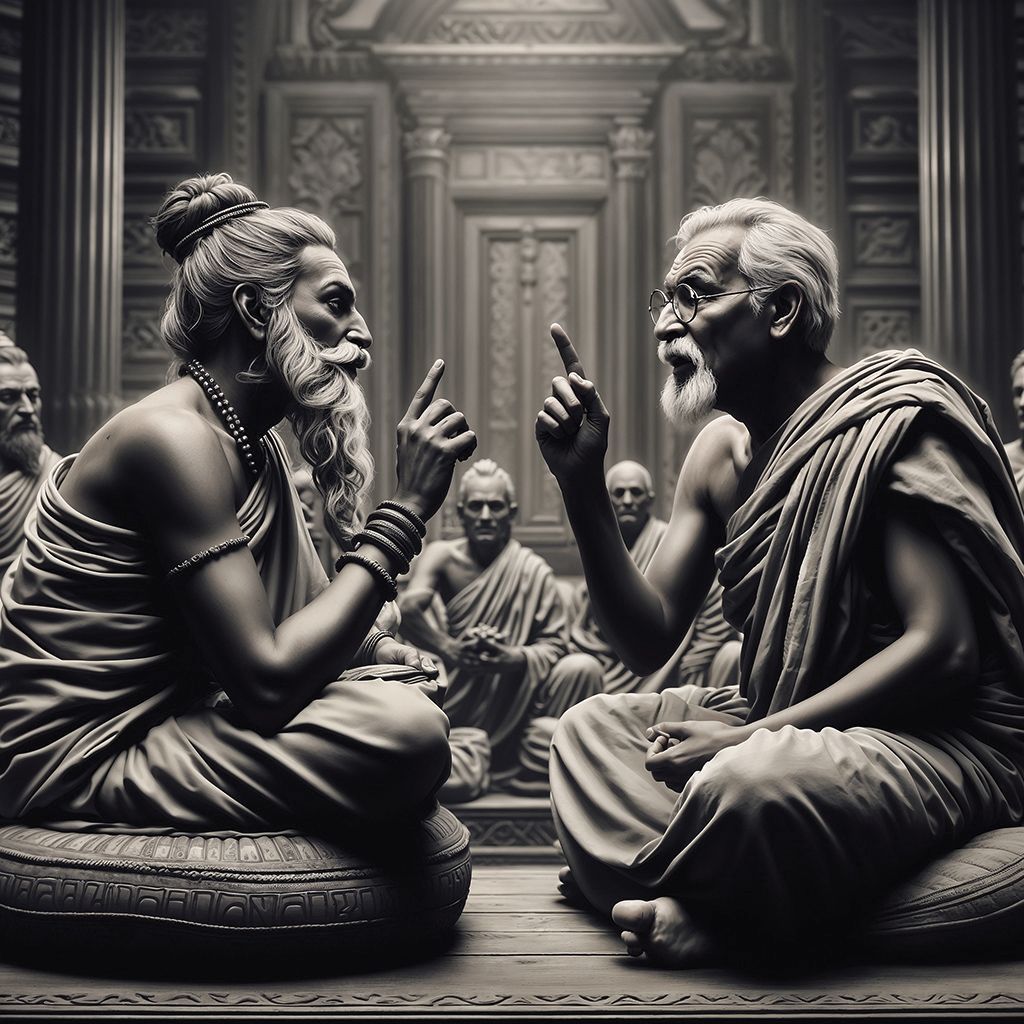
In the Indian philosophical tradition, argument and debate were not just tolerated; they were actively encouraged. Think about it – the ancient sages and scholars didn’t shy away from questioning everything, from the nature of reality to the purpose of human existence. They engaged in rigorous debates, sharpening their intellect and expanding their understanding through the power of discourse.
This spirit of inquiry is beautifully captured in Amartya Sen’s book, “The Argumentative Indian,” which highlights how debate and discussion have been integral to Indian culture for centuries. From the lively discussions in village squares to the sophisticated debates in royal courts, argumentation was seen as a way to arrive at truth, to refine one’s understanding, and to challenge dogma.
The period from the 5th to the 10th century CE, often referred to as the golden age of Indian philosophy, was characterized by vibrant scholarly exchanges. Philosophers like Shankaracharya and Nagarjuna engaged in rigorous debates that challenged and refined their ideas. Shankaracharya, a proponent of Advaita Vedanta, debated tirelessly with scholars of other schools, including the Buddhists, Jains, and Mimamsakas. These debates were not mere intellectual exercises but were deeply spiritual engagements aimed at uncovering the nature of reality.
Nagarjuna, a central figure in Mahayana Buddhism, used dialectical reasoning to deconstruct prevailing notions and reveal the emptiness (shunyata) of all phenomena. His method, known as the Middle Way (Madhyamaka), emphasized the importance of going beyond dualistic thinking. The dialectical approach of Nagarjuna was revolutionary, and his debates with contemporary scholars significantly shaped Buddhist philosophy.
The practice of debate was not confined to academic circles but permeated everyday life. Public debates were common, and kings often patronized philosophical disputations as a form of intellectual entertainment and enlightenment. These debates were platforms for presenting and defending diverse viewpoints, fostering a culture of critical thinking and intellectual resilience.
The Upanishads, some of the oldest philosophical texts in India, are essentially records of debates between sages, where profound questions about the nature of existence, consciousness, and the self were explored. The Bhagavad Gita, another cornerstone of Indian philosophy, is structured as a dialogue between Krishna and Arjuna, where existential and ethical dilemmas are examined through rigorous argumentation.
But what happened to this rich tradition of debate and inquiry? Why have we become so afraid of confrontation in our modern world? Perhaps it’s the fear of being wrong, of having our beliefs challenged, or of being seen as aggressive or uncooperative.
But I believe that by avoiding confrontation, we are doing ourselves a disservice. We are denying ourselves the opportunity to grow, to learn, and to expand our understanding of the world. When we engage in respectful and open-minded debate, we create a space for new ideas to emerge, for old beliefs to be challenged, and for our own perspectives to be transformed.
So, what can we do to revive this lost art of argument?
To revive the lost art of argument, we must first reclaim its true essence. Argument is not about winning or losing; it is about the pursuit of truth. It is about challenging our own assumptions and expanding our horizons. By embracing debate, we can foster a culture of critical thinking and intellectual growth.
We must also recognize the importance of fostering environments where diverse viewpoints can be expressed and examined. Educational institutions, workplaces, and even our homes should become arenas of constructive debate. Encouraging open dialogue will not only enhance our intellectual and spiritual understanding but also build resilience and adaptability in an ever-changing world.
The path of self-discovery is not a solitary one; it’s a journey we embark on together. By embracing the art of argument, we can rediscover the joy of intellectual exploration, the power of collective wisdom, and the transformative potential of open-minded dialogue.