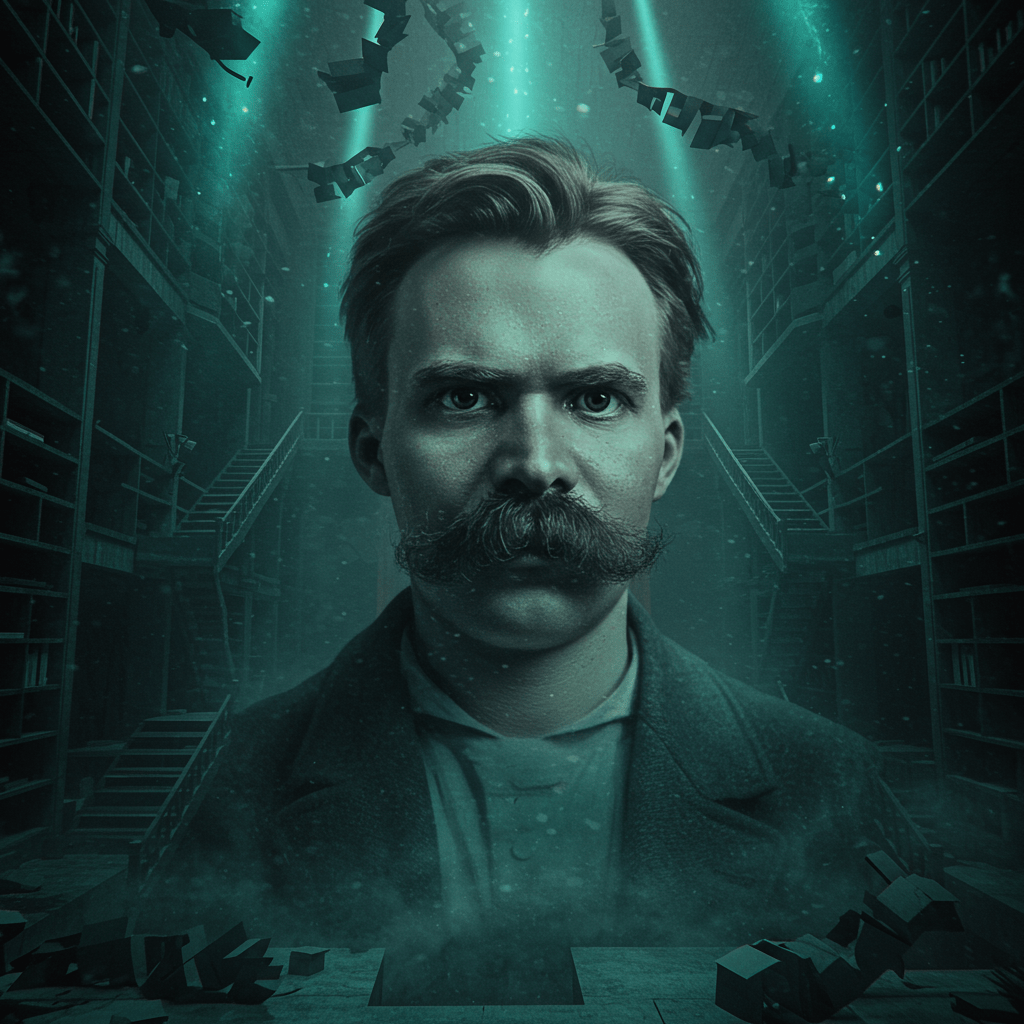
Dancing with the Abyss: Friedrich Nietzsche
Nietzsche: The rebel philosopher who urged us to embrace chaos, question all certainties, and dance on the edge of the abyss in pursuit of our truest self.
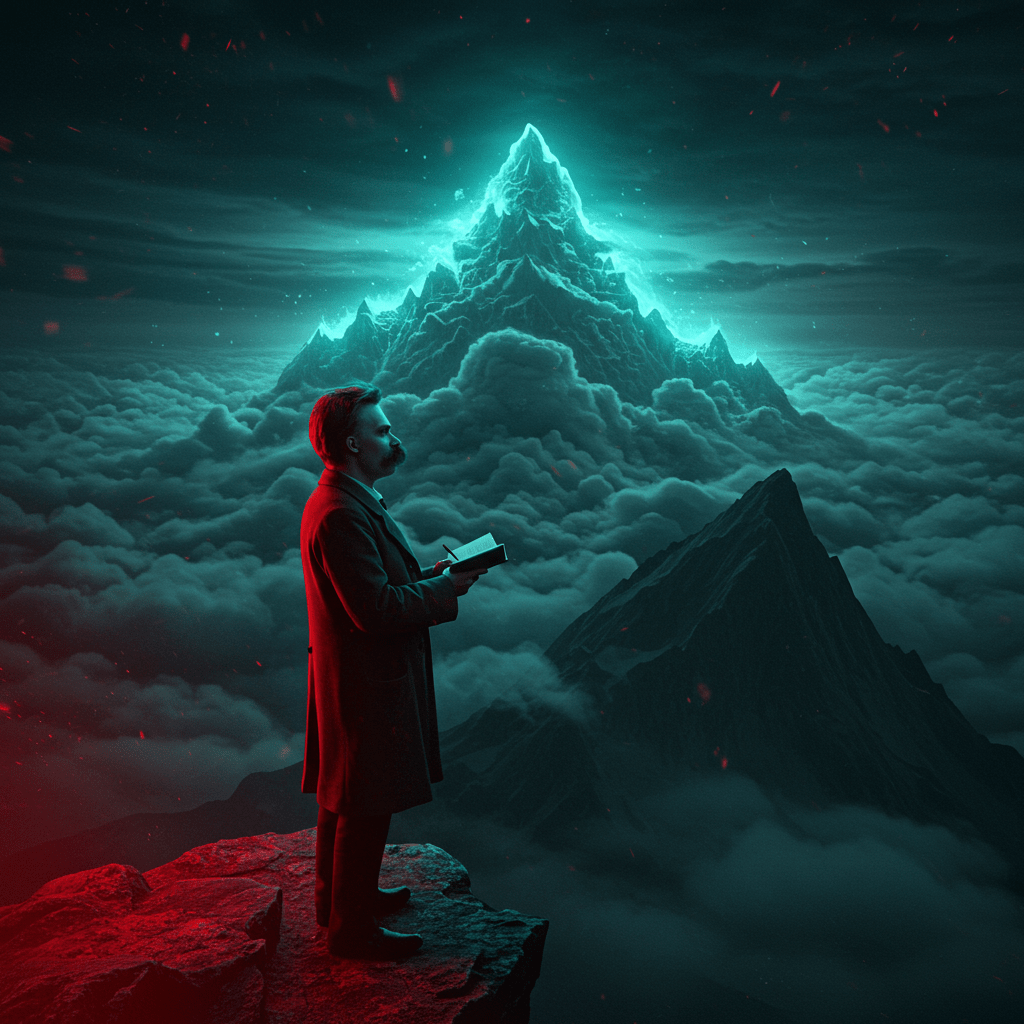
Friedrich Nietzsche (1844–1900) was a German philosopher, poet, and iconoclast whose explosive thought shattered the comforts of tradition. Living amidst the upheavals of a rapidly industrializing Europe, he challenged Christian dogma, morality, and the herd instincts of society, forging a philosophy of self-overcoming and eternal recurrence. His aphoristic style, laced with wit and paradox, provoked outrage and inspiration, echoing through art, psychology, and spirituality. Isolated by illness and misunderstood by his peers, Nietzsche became a prophet of individuality—demanding that each of us craft meaning from the raw materials of suffering, joy, and relentless questioning.
Nietzsche revolutionized philosophy with works such as “Thus Spoke Zarathustra,” “Beyond Good and Evil,” and “The Birth of Tragedy.” He coined concepts like the Übermensch and “will to power”—igniting existentialism, influencing psychology, literature, and stirring a spiritual rebellion that continues to unsettle and awaken.
Nietzsche’s philosophy is an uncompromising invitation to confront our most terrifying shadows and forge authentic meaning where none is given. He shattered illusions of ready-made truths, urging us to experiment, to become who we truly are—beyond societal gods, roles, and labels. Self-discovery, for Nietzsche, is the art of creative destruction: letting old certainties crumble and birthing new selves from the abyss. He challenges us to dance with our suffering, to find joy in overcoming, and to recognize that every inner wound can be a “womb”—the birthplace of something sacred and untamed within us.
Though Nietzsche never spoke the language of non-duality, his vision dissolves rigid oppositions: good and evil, spirit and flesh, order and chaos. Through his doctrine of “eternal recurrence” and the affirmation of life’s contradictions, Nietzsche points toward a reality where opposites interpenetrate. The Übermensch embraces paradox—embracing the totality of existence, not fleeing shadow or pain. In this, Nietzsche offers a radical non-binary wisdom: transcend separateness, honor becoming, and dance with the interplay of light and dark. Selfhood is a process, not a prison—freedom is found in embracing life’s unity, not its divisions.
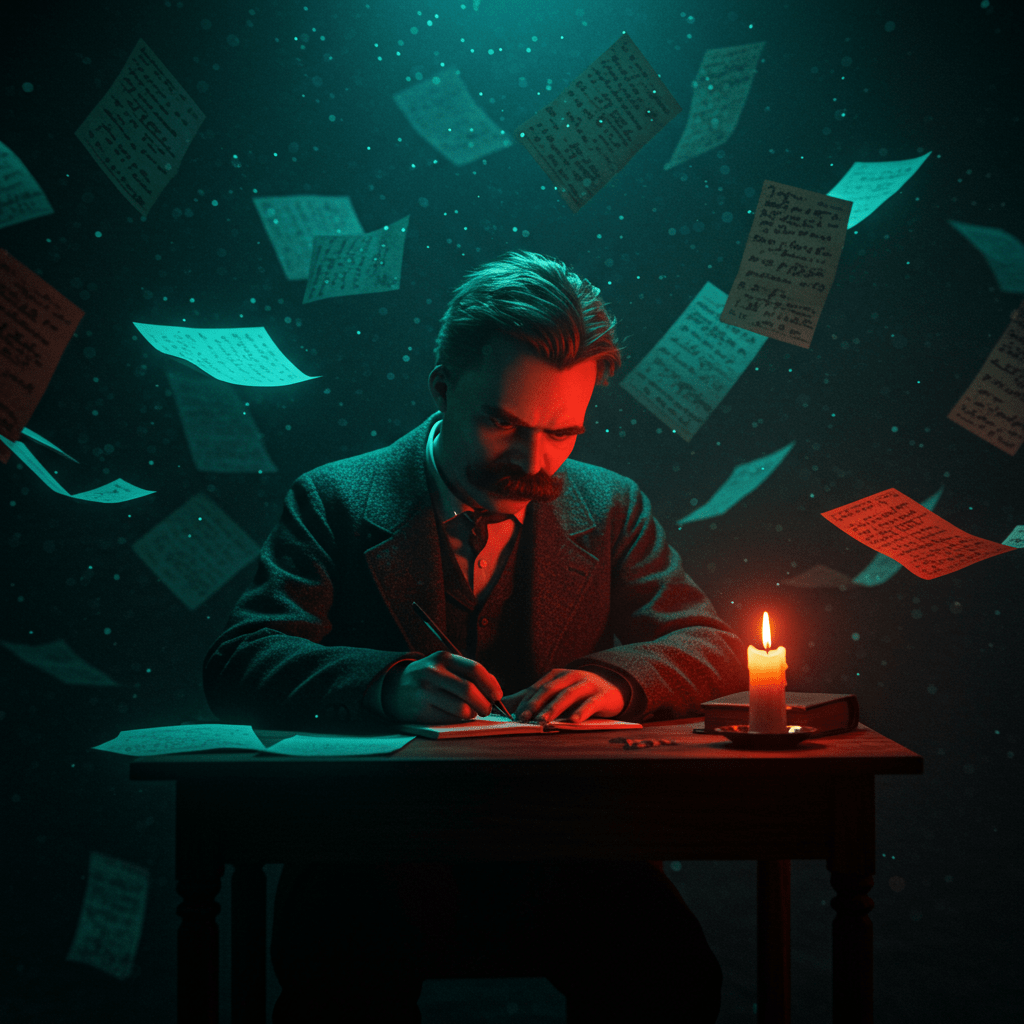
One must still have chaos in oneself to be able to give birth to a dancing star.
Tormented by chronic pain and illness, Nietzsche endured isolation, misunderstanding, and professional failure. His relentless honesty cost him dearly—yet in his darkest hours, he mined suffering for truth, turning adversity into art with ferocious courage.
Thus Spoke Zarathustra
Beyond Good and Evil
The Birth of Tragedy
Walter Kaufmann’s biography, “Nietzsche: Philosopher, Psychologist, Antichrist”
BBC documentary “Nietzsche: Genius of the Modern World”
Stanford Encyclopedia of Philosophy—Nietzsche entry
Kaufmann, Walter. Nietzsche: Philosopher, Psychologist, Antichrist.
Stanford Encyclopedia of Philosophy – Nietzsche entry.
BBC Documentary, “Nietzsche: Genius of the Modern World.”
Nietzsche: The rebel philosopher who urged us to embrace chaos, question all certainties, and dance on the edge of the abyss in pursuit of our truest self.
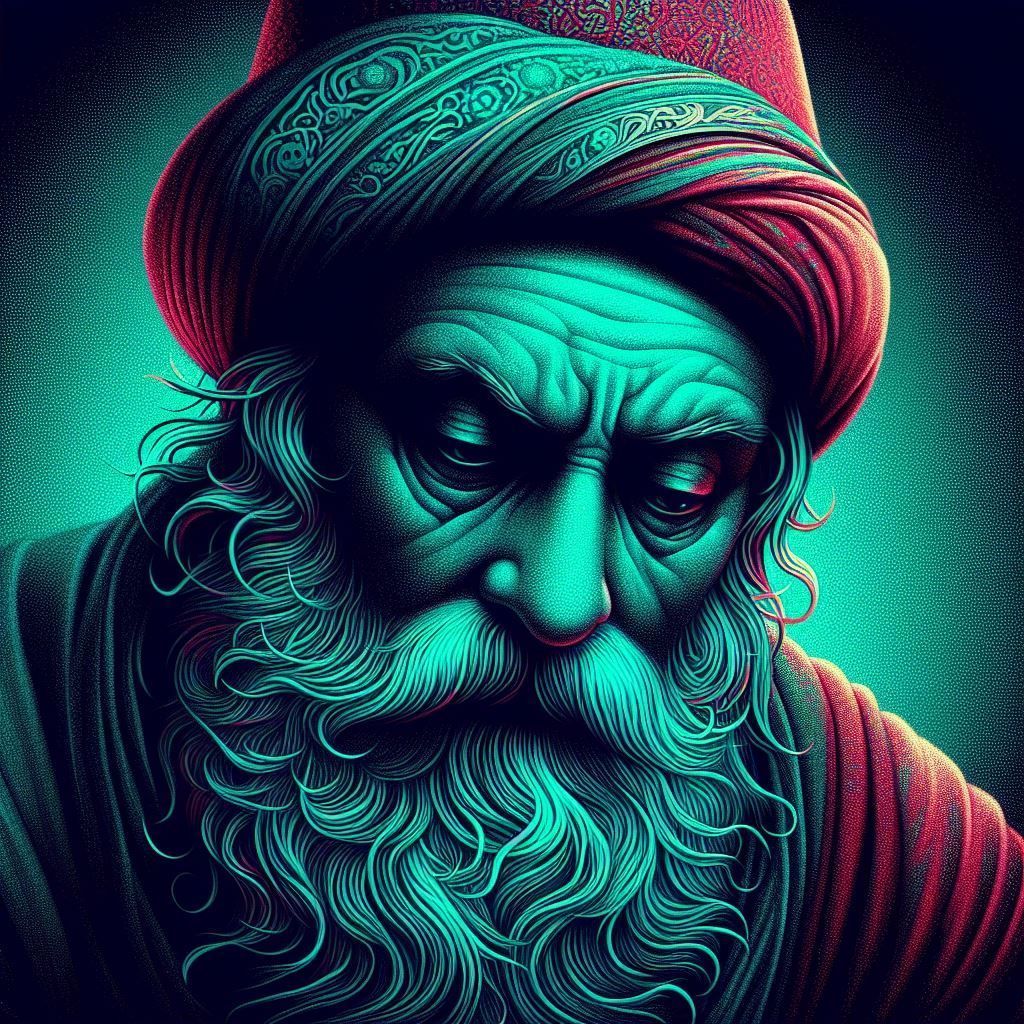
In Rumi’s words, “The wound is the place where the light enters you.” This simple yet profound statement speaks to the power of love to heal and transform us. When we open our hearts to love, we allow ourselves to be seen and known, even in our brokenness. In this way, love can lead us to a deeper understanding of ourselves and the world around us.
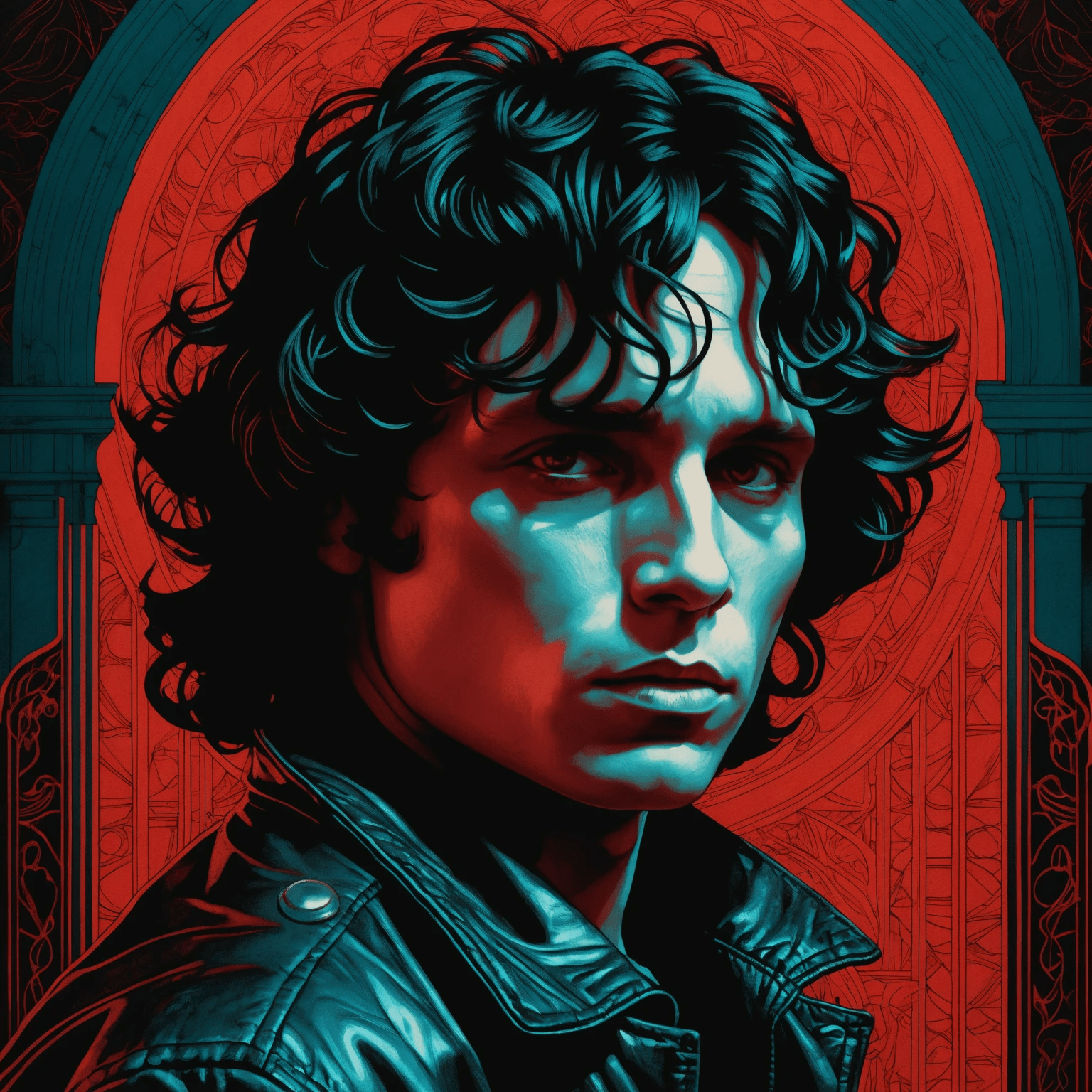
Jim Morrison, a Dionysian poet disguised as a rock star, explored themes of freedom and the subconscious, inspiring generations to question societal norms and seek authentic experience.
Get In Touch
T3, Linea Orchid, Green Park Layout, Bengaluru 560 043, Karnataka INDIA
info@unalomeproject.com
+91 98865 51029
Hours: Mon-Fri 9:00AM – 6:00PM